August 2026 · Urban Surf NW · Wetsuits
Buying a wetsuit is confusing if you don’t know the language. Thickness, seam construction, entry systems, neoprene type — every brand uses slightly different terminology for the same things, and the spec sheet doesn’t tell you how a suit actually feels at 48 degrees on a November kite session. This is the straightforward version. What the terms mean, what actually matters for PNW water, and how to avoid the most common mistake we see people make in the shop.
Thickness

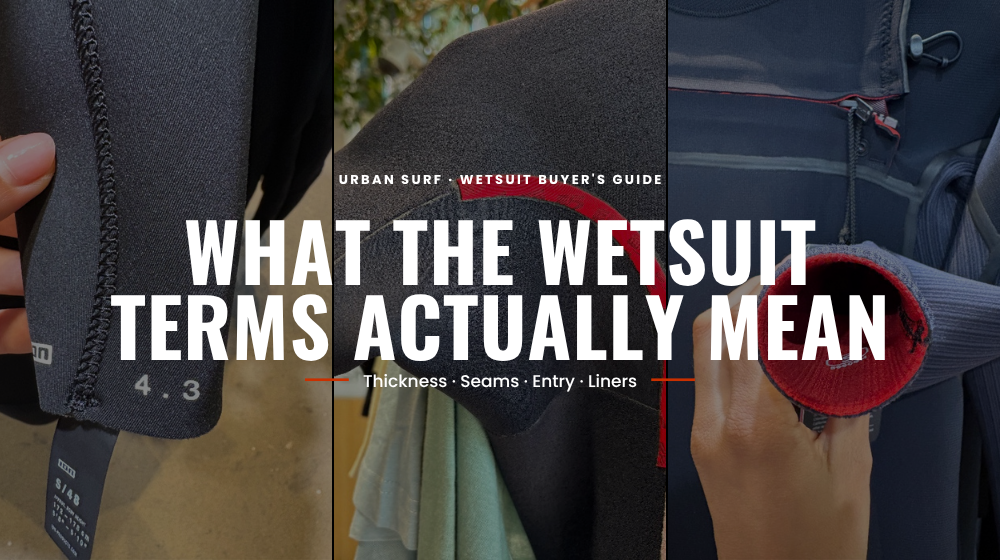
The numbers on every wetsuit — 5/4, 4/3, 3/2 — refer to the neoprene thickness in millimeters. The first number is the torso thickness, the second is the arms and legs. A 4/3 has 4mm in the core where you need the most warmth and 3mm in the limbs where you need the most flexibility.
For our local bodies of water, here is how we think about it.
- 3/2 — Works in summer when the water is in the mid-60s. Fine for surfing in warm conditions but gets cold fast here once October hits.
- 4/3 — The most versatile suit in the PNW lineup. Covers most of the year for surfing and wind sports. What we recommend most often for someone who is going to own one suit and use it regularly.
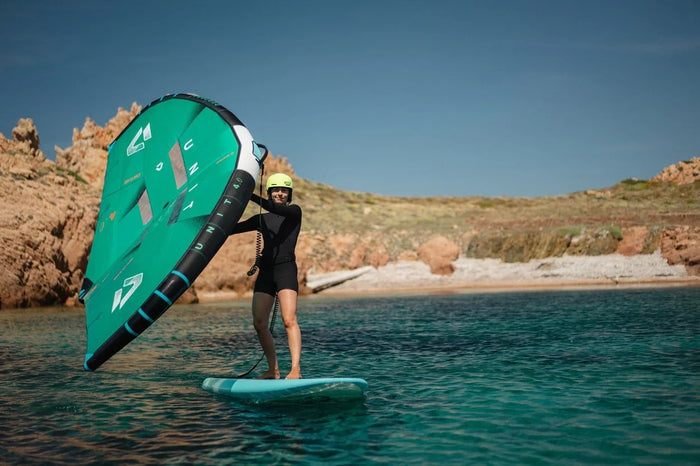
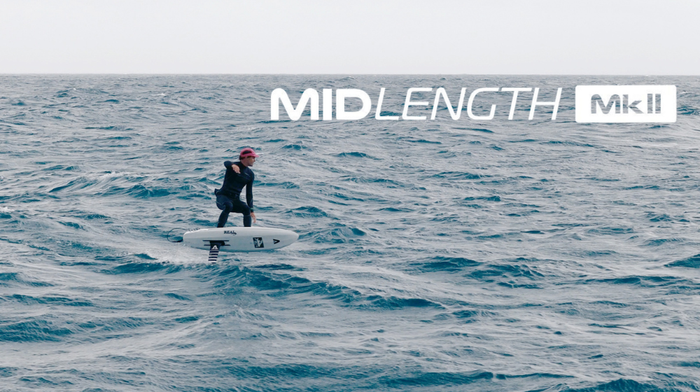
- 5/4 or 5/4/3 — What you want for serious cold water use. Winter sessions on Puget Sound, early morning Hood River in March, or any time you are spending extended time in the water in wind. Wing foilers and kiters should consider a 5/4 earlier in the season than surfers because standing upright in wind while wet drops your body temperature faster than paddling does.
- Hooded suits — Add another layer of warmth around your head and neck, which makes a real difference when it is cold and windy. For anyone spending serious time on the water from November through February, a hooded 5/4 is worth the extra cost.
*sometimes, higher end suits like O'Neill's Pyschotech 5/4+ will include a after the thickness. This means that the suit is actually constructed with an extra half millimeter, in this case 5.5mm and 4.5mm, but the higher end neoprene allows it to stretch and feel closer to a 5/4 suit. Usually, it's worth the extra money!
Seam Construction

The seams are where the water gets in. How a wetsuit is sewn together determines how warm and how durable it is, and it is the detail most people skip when shopping by price.
- Flatlock stitching — Thread runs through both panels and is visible on the inside and outside of the suit. The most basic and least water-resistant construction. Fine for warm water, not what you want for cold PNW sessions.
- Glued and Blind Stitched (GBS) — The baseline we recommend for this area. Panels are glued first, then stitched in a way that does not penetrate all the way through the neoprene. Water does not pass through easily. Most mid-range suits use this construction.
- Taped seams — A strip of material added over the GBS seam on the inside, outside, or both. More taping means better water resistance and more durability. High-end suits are fully taped internally and sometimes externally as well.
The practical takeaway: if you are surfing, kiting, or wing foiling in Puget Sound or Hood River from October through April, you want at minimum GBS construction. A flatlock suit will let water in at every seam and you will feel it immediately.
Entry Systems

The zipper determines how easy the suit is to get into and how much water it lets in at the back or chest.
- Back zip — The most common and easiest entry. Step into the suit as if it were a pair of pants and pull the cord connected to the zipper over your shoulder. The tradeoff is that the zipper runs down the full length of your spine, which is a natural flex point. Back zip suits are slightly less flexible than chest zip and let in a small amount of water. For beginners, larger riders, or anyone who just wants simplicity, back zip is a perfectly good choice.
- Chest zip — Moves the zipper to the front chest panel and leaves the back completely seamless. Harder to get into at first but the result is a warmer, more flexible suit with less water entry. If you are surfing or foiling regularly, chest zip is worth getting used to. It is what most performance-focused surfers prefer and the go to option for most of us at the shop.
- Zipperless — No zipper at all. Uses a stretchy panel entry which turns away most consumers immediately. Maximum flexibility and minimum water entry but the most difficult to get on and off, especially in cold conditions. Some pros prefer it, but we aren't that hardcore anyways.
For most people shopping here, the choice is between back zip and chest zip. If you are newer to the water or want simplicity, go back zip. If you surf, kite or foil regularly and want the warmest most flexible option, go chest zip.
Neoprene
Not all neoprene is the same. Traditional petroleum-based neoprene is still common in entry-level suits, but most brands have moved toward alternatives that are warmer, more flexible, and less environmentally damaging.
- Limestone-based neoprene — Lighter, warmer, and more flexible than petroleum neoprene. Found in mid-range and high-end suits from Xcel, Rip Curl, O'Neill, and others. When you see brand names like Ultraflex, Nanoprene, or similar, they are usually referring to limestone-based or composite materials.
- Natural rubber — Used by brands like Rip Curl in their E5 material. Neoprene-free, made from rubber trees, and performs similarly to high-quality synthetic neoprene while being more sustainable.
For practical purposes: limestone-based or natural rubber neoprene is noticeably stretchier and lighter than basic petroleum neoprene. If you put two suits on in the shop, the difference is immediately obvious. It is one of the main reasons mid-range suits often feel dramatically better than budget suits even at similar thicknesses.
Liners

The interior lining affects warmth and comfort more than most people realize. It is also something you cannot evaluate from a photo.
- Basic jersey liner — Smooth and comfortable but not particularly warm on its own. Common in entry-level and warm-water suits.
- Thermal or fleece liner — Used in the torso and sometimes legs of cold-water suits to trap heat. Rip Curl calls theirs Flash Lining. O’Neill uses Firewall. Xcel uses Thermo Dry Infrared. The names differ but the concept is the same: a soft textured interior that warms up quickly and retains heat even when wet.
Liner quality is one of the areas where mid-range and high-end suits differ most from budget options. A cheap suit might have acceptable seam construction but a thin slow-drying liner that feels cold from the first duck dive. When customers tell us a suit was cold even at the right thickness, it is often the liner.
The Most Common Mistake
The most common thing we see is someone buying a suit that is right for the price but wrong for the conditions they are actually going to use it in.
A 3/2 flatlock suit might be fine for a surf trip to Costa Rica. Used for wing foiling on Puget Sound in October, it will be genuinely miserable and will probably put someone off the sport.
The calculation that matters is not what the suit costs. It is what the suit costs relative to how much time you are going to spend in it and how cold the water is where you are going to use it. A $250 suit used twice because it was too cold is a worse investment than a $400 suit used 40 times a year.
If you are new to water sports in the PNW and buying your first wetsuit, come in and tell us where you are planning to use it, what time of year, and how long your sessions are. We’ll point you at the right suit in ten minutes.
Quick Reference Tables
Thickness by Season and Discipline
| Water Temp | Season (PNW) | Surfing / SUP | Wing / Kite / Sail |
|---|---|---|---|
| 62°F+ | Jul — Aug | 3/2 or springsuit | 3/2 minimum |
| 55°F — 62°F | May — Jun, Sep — Oct | 4/3 | 4/3 or 5/4 |
| 48°F — 55°F | Nov — Apr | 5/4 hooded | 5/4 hooded required |
| Under 48°F | Deep winter | 5/4+ hooded + gloves + boots | 5/4+ hooded + gloves + boots |
Seam Construction Comparison
| Seam Type | Water Resistance | Durability | Best For |
|---|---|---|---|
| Flatlock | Low | Moderate | Warm water only. Not recommended for PNW. |
| GBS | Good | Good | PNW minimum. Works well year-round. |
| GBS + Internal Tape | Very good | Very good | Cold water, extended sessions, wind sports. |
| Fully Taped | Excellent | Excellent | High-end cold water. Winter PNW, serious use. |
Entry System Comparison
| Entry Type | Ease of Entry | Warmth | Flexibility | Best For |
|---|---|---|---|---|
| Back Zip | Easy | Good | Good | Beginners, larger riders, casual use |
| Chest Zip | Learning curve | Better | Better | Surfers, foilers, regular cold water use |
| Zipperless | Difficult | Best | Best | Performance surfing, experienced users |
Our Take
We carry suits from Rip Curl, O’Neill, and Xcel across the full range from affordable entry-level options to serious cold-water builds. If you know what you are looking for, you can browse our full wetsuit collection online. If you want help picking, come in or give us a call.
Most people need about ten minutes in the shop to find the right suit. We will ask where you are using it, what time of year, how long your sessions are, and whether you run warm or cold. From there it is usually pretty obvious.
(206) 545-9463 · 2100 N. Northlake Way, Seattle